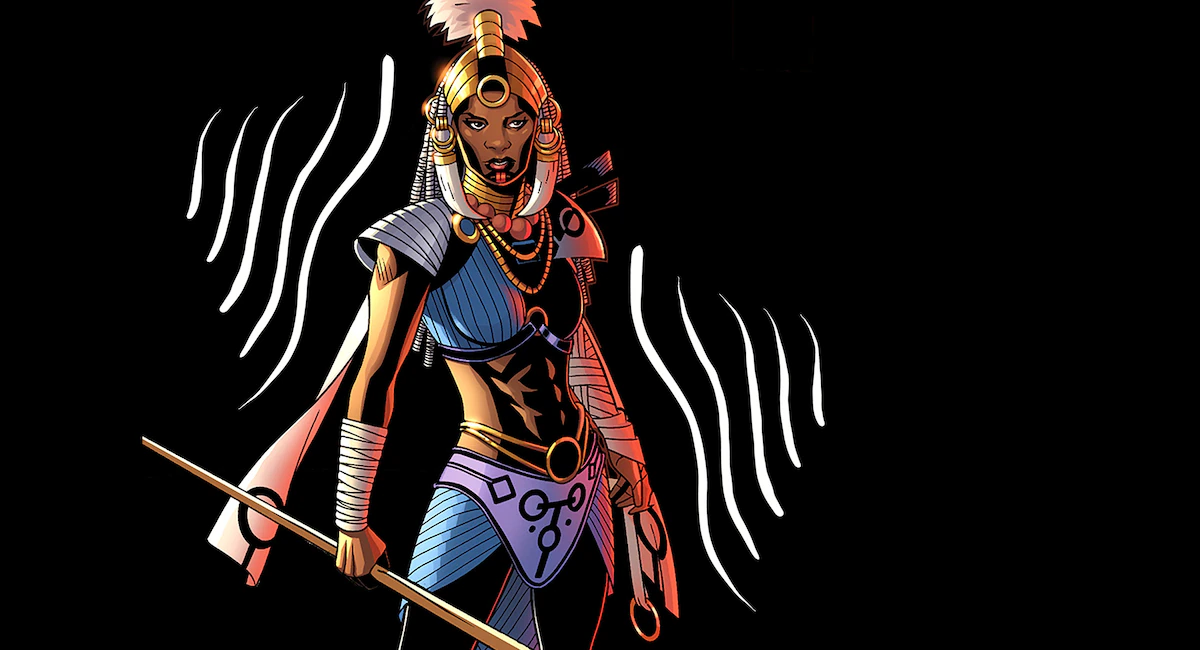
Shuri: The Wakandan Genius – Early Life and Background

ranchosantafenow.net – In the vibrant and technologically advanced world of Wakanda, one name stands out as a beacon of innovation and intelligence: Shuri. As the younger sister of T’Challa, the Black Panther, Shuri has captured the hearts of Marvel fans with her brilliance, wit, and resourcefulness. Her contributions to Wakanda’s technological prowess and her role in the Marvel Cinematic Universe (MCU) have cemented her status as a genius and a beloved character.

Early Life and Background

Shuri was born into royalty as the daughter of King T’Chaka and Queen Ramonda. From a young age, her inquisitive nature and extraordinary intellect set her apart. She was naturally curious about the world around her, and her fascination with technology and science led her to pursue knowledge beyond the traditional confines of Wakandan society. This thirst for learning and innovation would later position her as Wakanda’s leading scientist and technologist.

Technological Innovations

As Wakanda’s chief scientist, Shuri is responsible for some of the country’s most advanced technological developments. Her work with vibranium, the rare and powerful metal found only in Wakanda, has led to groundbreaking innovations. Shuri designed the Black Panther suit, equipped with kinetic energy absorption and redistribution capabilities, enhancing the combat prowess of its wearer. Her advancements in medical technology, transportation, and energy have also played a crucial role in Wakanda’s prosperity.

Role in the MCU

Shuri made her first appearance in the MCU in “Black Panther” (2018), portrayed by actress Letitia Wright. Her character quickly became a fan favorite due to her intelligence, humor, and strong will. Shuri’s role extended beyond her initial appearance, as she played a pivotal part in “Avengers: Infinity War” and “Avengers: Endgame,” where her scientific expertise was crucial in the fight against Thanos.

Shuri’s Impact and Legacy

Shuri’s character represents a powerful narrative of empowerment and representation. As a young Black woman excelling in STEM (Science, Technology, Engineering, and Mathematics) fields, she serves as an inspiration to audiences worldwide. Her character challenges traditional gender and racial stereotypes, highlighting the importance of diversity and inclusion in media and society.

Conclusion

Shuri’s genius and contributions to Wakanda’s technological advancement have made her an iconic figure in the Marvel universe. Her character embodies the spirit of innovation, courage, and resilience. As audiences anticipate her future adventures, Shuri continues to inspire and ignite the imaginations of fans across the globe. Her legacy as the Wakandan genius is one that will endure, celebrating the power of intelligence and creativity in shaping our world.

Freddy Krueger: The Nightmare Stalker

ranchosantafenow.net – Freddy Krueger, the infamous figure of horror film fame, has cemented his place as one of the most terrifying characters in cinematic history. Known as “The Nightmare Stalker,” Freddy has haunted the dreams of characters and audiences alike since his first appearance in the mid-1980s. Let’s delve into the origins, characteristics, and cultural impact of this legendary horror villain.

Origins and Background

Freddy Krueger was created by Wes Craven for the 1984 film “A Nightmare on Elm Street.” The character is portrayed as a burned serial killer who uses a glove armed with razors to kill his victims in their dreams, causing their deaths in the real world as well. Freddy’s backstory is shrouded in darkness; he was a child murderer who was burned to death by the parents of his victims, only to return as a vengeful spirit in the dream world.

Characteristics

Freddy Krueger is instantly recognizable thanks to his distinctive appearance: a disfigured face, a fedora hat, a red-and-green striped sweater, and his infamous bladed glove. His character possesses a sinister sense of humor, often making darkly comedic quips while tormenting his victims. Unlike many horror villains, Freddy’s power lies in his ability to manipulate dreams, making him a formidable and unpredictable adversary.

Cultural Impact

Freddy Krueger quickly became a cultural icon, spawning a series of sequels, spin-offs, and merchandise. His influence extends beyond the film series; he has appeared in comic books, video games, and even music. The character’s unique ability to invade dreams taps into universal fears, making him a lasting figure in the horror genre. Freddy’s impact is also evident in the way he has inspired other horror films and villains, contributing to the evolution of the genre.

Conclusion

Freddy Krueger remains a pivotal figure in horror cinema, embodying the fears that lurk in the subconscious mind. His blend of terror and dark humor, coupled with his iconic look and dream-manipulating abilities, ensures his place as “The Nightmare Stalker” in the annals of horror history. Whether you’re a seasoned horror fan or new to the genre, Freddy Krueger’s terrifying legacy is one that continues to captivate and frighten audiences worldwide.

Giganta: The Towering Villain of DC Comics

ranchosantafenow.net – Giganta, one of the most formidable adversaries in the DC Comics universe, has been a persistent thorn in the side of Wonder Woman and other superheroes. Known for her ability to increase her size and strength to colossal proportions, Giganta stands out as both a physical and intellectual threat.

Origins and Evolution

Giganta first appeared in DC Comics in 1944, created by William Moulton Marston and artist Harry G. Peter. Initially, she was a gorilla transformed into a woman by an experiment gone wrong. Over the years, her backstory has been reimagined. The most recognized version portrays her as Dr. Doris Zeul, a scientist with a terminal illness who transfers her mind into the body of a strongwoman named Olga. This transformation grants her the ability to grow to gigantic sizes.

Powers and Abilities

Giganta’s primary power is her ability to increase her size, which also enhances her strength and durability. This makes her a formidable opponent in battle, capable of going toe-to-toe with superheroes like Wonder Woman. In addition to her physical prowess, Giganta is also a brilliant scientist, often using her intellect to devise cunning strategies and schemes.

Role in the DC Universe

Throughout her history, Giganta has been a member of several villainous groups, including the Injustice League and the Secret Society of Super Villains. Her alliances often put her in direct conflict with the Justice League and other superhero teams. Despite her villainous nature, there have been moments where Giganta’s character has shown depth and complexity, sometimes hinting at a more ambiguous moral compass.

Cultural Impact

Giganta has appeared in various media beyond the comic books, including animated series like “Super Friends” and “Justice League Unlimited,” as well as video games and merchandise. Her character has become an iconic villain, representing the archetype of the towering adversary who challenges heroes not only with physical might but also with cunning intellect.

Conclusion

Giganta remains one of DC Comics’ most enduring villains, captivating audiences with her unique powers and complex personality. As comics continue to evolve, Giganta’s character is likely to be reinterpreted and adapted, keeping her relevant for new generations of fans. Her presence in the DC Universe serves as a reminder of the diverse and dynamic nature of comic book storytelling.

Circe: The Enchantress of Ancient Mythology

ranchosantafenow.net – Circe, a fascinating figure of Greek mythology, is often depicted as a powerful enchantress with the ability to transform her enemies into animals. Her story is intertwined with themes of magic, transformation, and the intricate dynamics of power and control. As the daughter of the sun god Helios and the ocean nymph Perse, Circe occupies a unique position in the pantheon of mythical figures, blending divine power with mortal vulnerability.

Origins and Background

Circe’s mythological roots trace back to the island of Aeaea, where she lived in isolation, surrounded by a menagerie of enchanted creatures. Her lineage, being of both divine and terrestrial origin, endowed her with formidable magical abilities. She is often portrayed as a beautiful, seductive woman capable of manipulating anyone who crosses her path, a trait that made her both feared and revered.

Circe in Homer’s Odyssey

One of the most famous tales involving Circe is found in Homer’s “Odyssey.” When Odysseus and his men land on Aeaea during their journey home from the Trojan War, Circe welcomes them with a feast. However, her hospitality is a guise, as she uses a potion to transform Odysseus’s crew into swine. Odysseus, protected by the herb moly given to him by Hermes, confronts Circe and demands the restoration of his men. Impressed by his bravery, Circe reverses the spell and aids the hero in his journey.

Themes and Symbolism

Circe’s story explores several enduring themes, such as the duality of human nature, the corrupting influence of power, and the transformative potential of love and forgiveness. Her ability to change men into animals symbolizes the primal instincts lurking beneath human civilization. Yet, her eventual assistance to Odysseus suggests a more nuanced character capable of growth and change.

Circe in Modern Interpretations

In contemporary literature and media, Circe’s character has been reimagined in various ways. She often embodies the archetype of the misunderstood, complex woman who defies societal norms. Notably, in Madeline Miller’s novel “Circe,” she is portrayed as a deeply introspective character, grappling with her identity and seeking her place in a world that fears her power.

Conclusion

Circe remains a captivating figure in mythology, embodying the complex interplay of power, transformation, and redemption. Her story continues to resonate, offering insights into the timeless human struggle for identity and autonomy. Whether seen as a villain or a misunderstood heroine, Circe’s legacy endures as a testament to the enduring power of myth.